
Molton is a cotton fabric that is raised on both sides. That brushing gives it the soft, matt surface that swallows light instead of reflecting it, which is why you find it behind almost every stage, in photo studios and on trade fair stands. The name comes from the French molleton, meaning soft cotton cloth. In English it is also sold as molleton or stage cloth. Which type you need depends mostly on weight: light deco molton at 130 g/m² lets light through, black stage molton at 300 g/m² is opaque.
What is molton?
Classic molton is 100 per cent cotton. After weaving, the cloth is raised with fine wire rollers until the fibres stand up, creating the fluffy surface you know from stage curtains. It takes special machinery and experience to make, which is why Rabenring mainly works with molton produced in Germany. For stages, theatres and public venues molton has to be flame retardant, so it is impregnated after weaving. Where the fabric needs to be washed, there is molton made of polyester (Trevira CS). More on production, weave and qualities in the article What is molton?
Types of molton
Eight topics, from heavy stage molton to the table protector. Each card leads to a detailed guide.
 Stage moltonHeavy, raised on both sides, opaque in black. The classic for curtains and backdrops.
 Deco moltonLight and inexpensive for trade fairs, events and room decoration. Lets light through.
 Satin moltonTwill woven, raised on one side and tougher than stage molton. Popular in photo studios.
 Acoustic moltonAgainst echo and noise in schools, sports halls, bars, churches and meeting rooms.
 Molton curtainsMade up with webbing and eyelets, flame retardant to B1, printed on request.
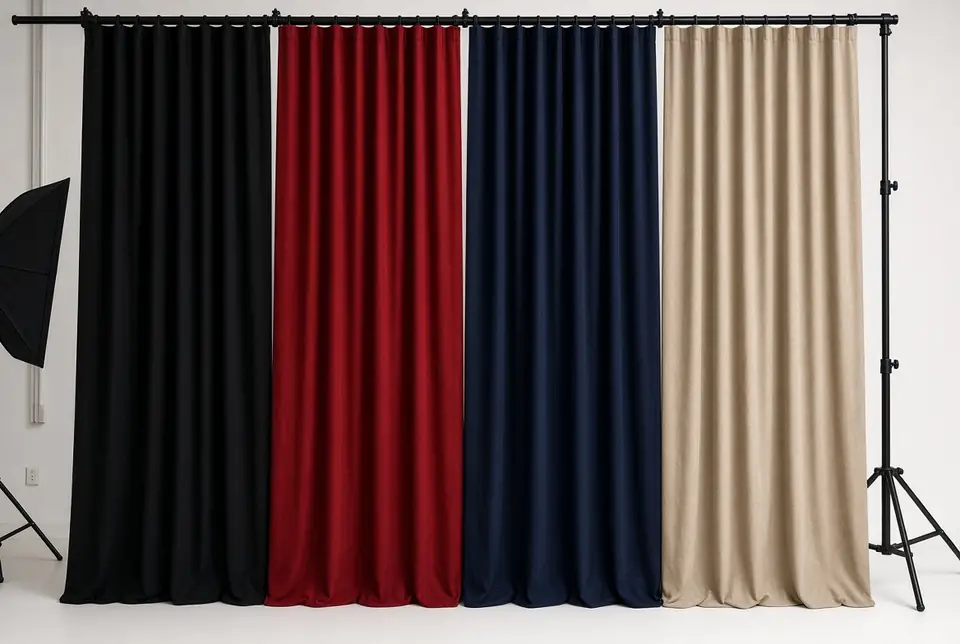 BackdropsBackground drapes in black stage molton for stage, studio, home cinema and club.
 Table moltonQuietens the table and protects the top from heat and spills.
 ApplicationsTheatre, film, photo studio, exhibition stands, hospitality and noise control in industry.
Molton types compared
The table shows the common qualities with the values usual in the trade. Individual manufacturers differ, so always check the data sheet when buying.
| Type | Weight | Raised | Supplied as | Typical use |
|---|---|---|---|---|
| Deco molton 130 | 130 g/m² | one side | 260 cm wide, 50 m roll | trade fairs, one-off events, translucent |
| Deco molton 165 | 165 g/m² | one side | 300 cm wide, by the metre | wall cladding, room decoration, translucent |
| Stage molton | from 300 g/m² | both sides | bales and by the metre | stage curtains, backdrops, green screen, opaque in black |
| Satin molton | 320 g/m² | one side, reverse with a matt sheen | by the metre | photo studio, blackout curtains |
| Kalmuk | 500 g/m² | both sides | 300 cm wide | acoustic curtains |
| Molton CS (polyester) | 320 g/m² | raised | by the metre | washable curtains, permanent installations |
Black molton: opaque for stage and studio
Black is the colour molton is bought in most often. Black stage molton from 300 g/m² lets no light through and reflects none either, because the raised surface absorbs it. On stage, lighting rigs, wings and backstage areas disappear from the audience’s view. In photo and film studios it gives a background without reflections. Deco molton is also available in black but stays translucent, so it is no good for blacking out a room. If you really need darkness, use stage molton or satin molton.
Buying molton: by the metre, by the roll or made up
Stage molton and deco molton 165 are sold by the metre, stage molton also as whole bales. Deco molton 130 is usually only available as a complete 50 m roll. If you don’t have a sewing machine that can handle heavy fabric, order the molton made up: hemmed, with webbing sewn into the top edge and eyelets roughly every 20 cm. It then arrives ready to hang on a truss or curtain track. Prices, widths and how to work out quantities are covered in Buying molton.
It pays to look closely. Colour differences between two dye lots become obvious as soon as two lengths hang side by side, which is why reputable dealers only supply first-quality goods and state the real fabric weight. A so-called stage molton well below 300 g/m² is usually not opaque. Ask for the fire certificate as well, because many venues will not let you hang the fabric without it.
Fire safety: what B1 means for molton
German venue regulations require textile decorations to be flame retardant. For molton that means it must be tested to DIN 4102 B1. Flame retardant does not mean non-combustible. A B1 fabric catches fire later than untreated cotton and does not keep burning once the flame is removed. Many stage moltons are also classified C-s1, d0 under the European standard EN 13501-1. Other countries have their own rules, so check with the venue. Details are in DIN 4102 B1 explained.
Cleaning and care
Cotton molton does not go in the washing machine. Washing removes the flame retardant, shrinks the fabric and makes the raised surface fluffy. Vacuum off dust and dry dirt, ideally with a brush attachment, and leave heavier soiling to a specialist cleaner. If a curtain needs regular washing, for example in a restaurant or a school, molton made of Trevira CS is the better choice: it can be hand washed at 30 °C and stays flame retardant, but costs considerably more. See Washing molton.
Frequently asked questions about molton
What material is molton?
Classic molton is a 100 per cent cotton fabric that is raised on one or both sides. There is also molton made of polyester (Trevira CS), which can be washed.
What is molton used for?
Molton absorbs light and dampens sound. It is used for stage curtains, backdrops, stage skirting, trade fair stands, green and blue screens, photo backgrounds, table protectors and, in heavy qualities, for acoustic curtains.
How is molton different from ordinary cotton fabric?
The difference lies in the raised surface and the weight. Molton is brushed after weaving, which makes it soft, matt and free of reflections. Stage molton weighs 300 g/m² or more, which makes it opaque. For venues it is also treated to be flame retardant.
Can molton be washed?
Cotton molton cannot be washed, because the flame retardant treatment washes out and the fabric shrinks. Only polyester molton (Trevira CS) is washable, and only by hand at 30 °C.
Which molton blocks light?
Black stage molton from 300 g/m² and satin molton are opaque. Deco molton at 130 or 165 g/m² lets light through.
Can molton be printed?
Yes. Stage molton and satin molton can be printed with flex or flock foil, and digitally on suitable material. This is how printed stage curtains and banners are made.
Questions about molton?
Call +49 35208 34773 or email info@rabenring.com